Polyurea: the strong, flexible foundation
Polyurea is one of the toughest coating technologies in the protective-coatings world. It is used to line truck beds, waterproof bridges, protect tanks and armor industrial equipment because it combines very high tensile strength with real flexibility. For floors, those properties translate into a coating that bonds tenaciously to concrete, resists impact and abrasion, and can stretch slightly as the slab expands, contracts and shifts.
That flexibility is especially valuable in the East Valley. Concrete in Mesa goes through dramatic temperature changes — a garage slab can sit near 100 degrees all afternoon and cool significantly overnight. Many homes are also built on expansive clay soils that move with moisture. Rigid coatings can crack or lose adhesion under that stress. Polyurea is better equipped to move with the slab.
How polyurea fits into a floor system
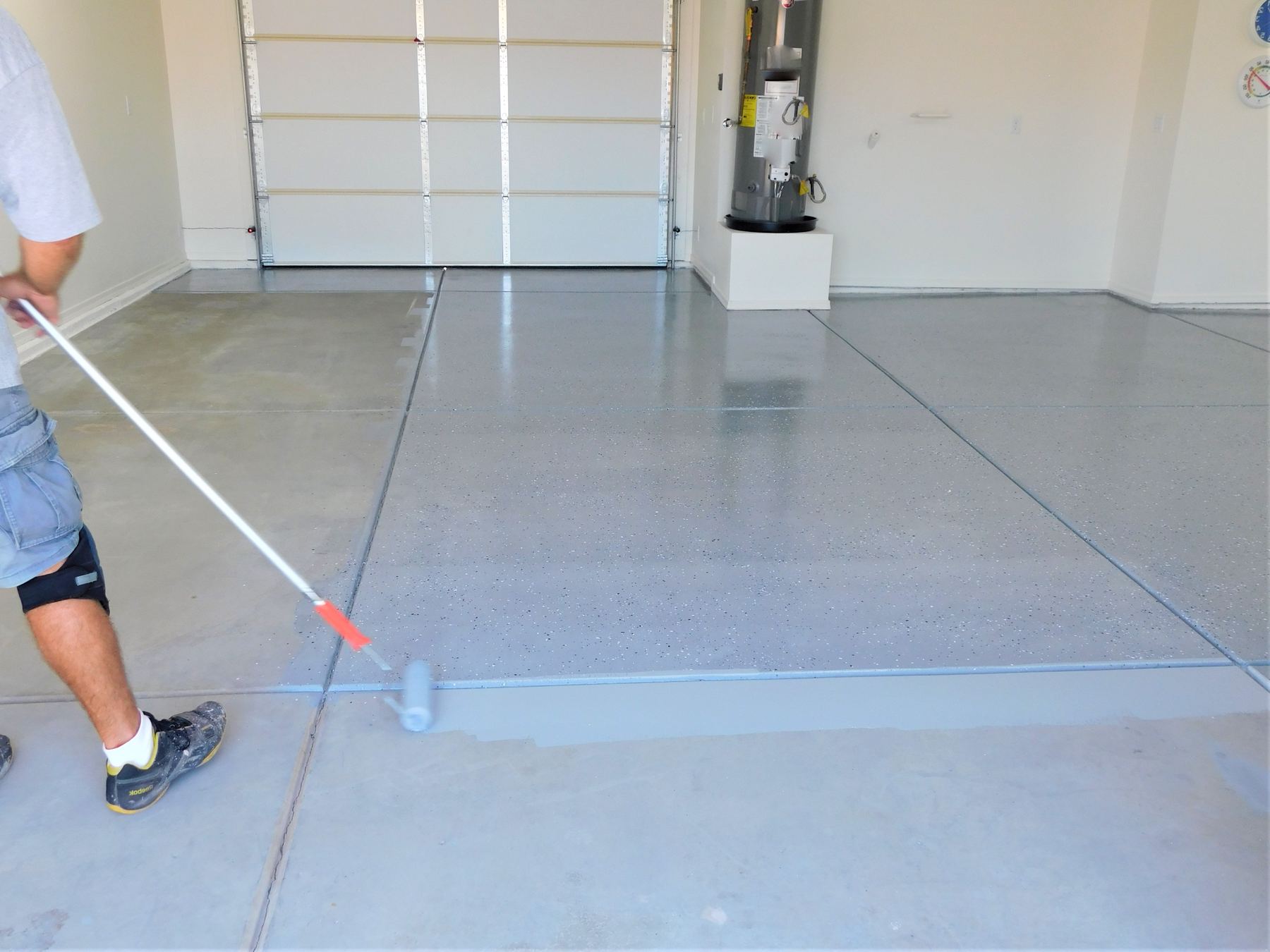
In professional floor coating, polyurea is most often used as the basecoat in a multi-layer system. A typical Mesa Epoxy Flooring Pros polyurea garage floor looks like this:
- Diamond-ground concrete with all sealers, laitance and contaminants removed.
- Crack, spall and joint repair with flexible, fast-setting repair compounds.
- Polyurea basecoat applied to penetrate the profiled concrete and create a strong, flexible bond.
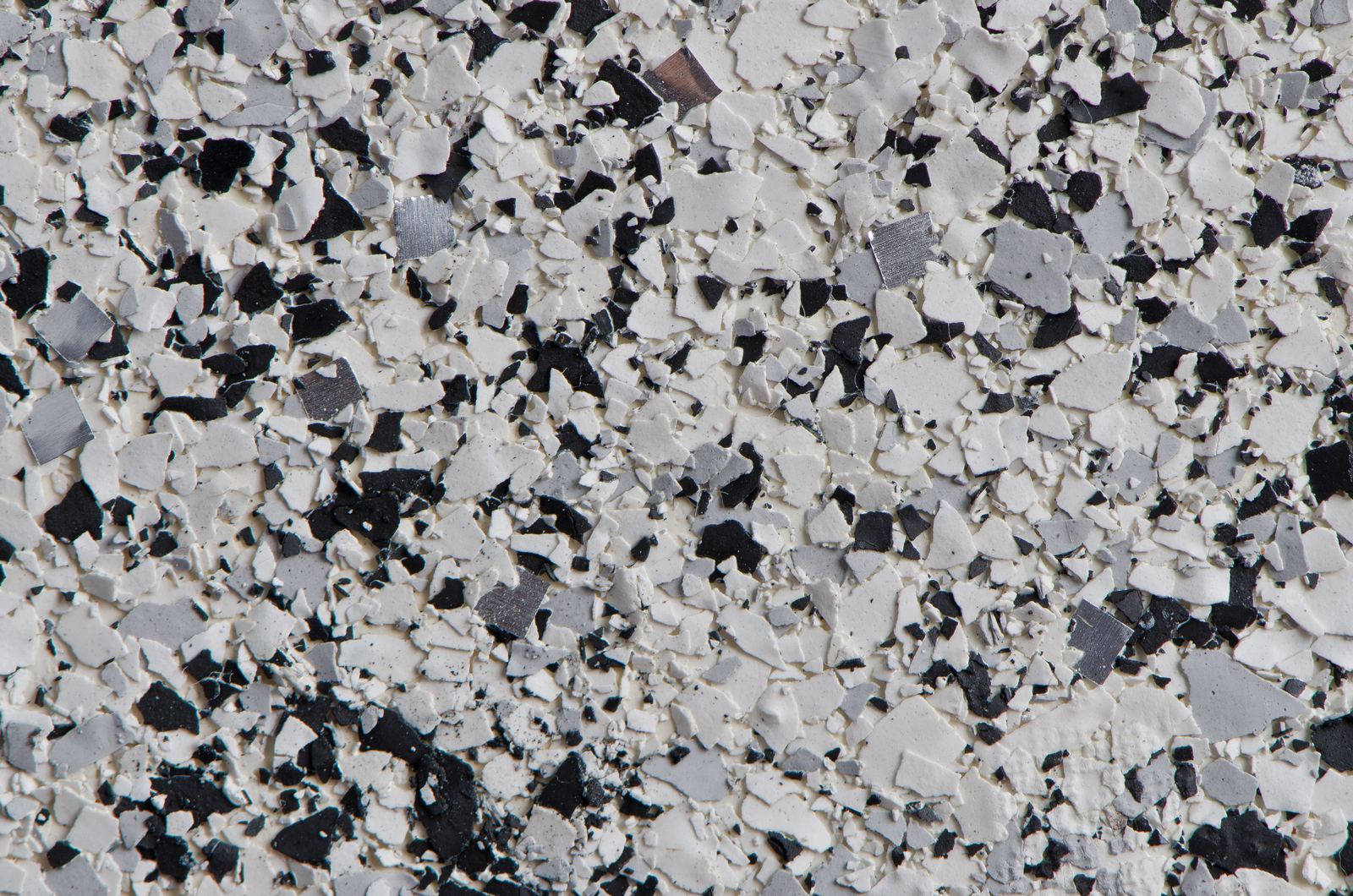
- Decorative broadcast of vinyl flake or quartz into the wet base, or a pigmented solid color.
- Polyaspartic topcoat for UV stability, chemical resistance, gloss and texture control.
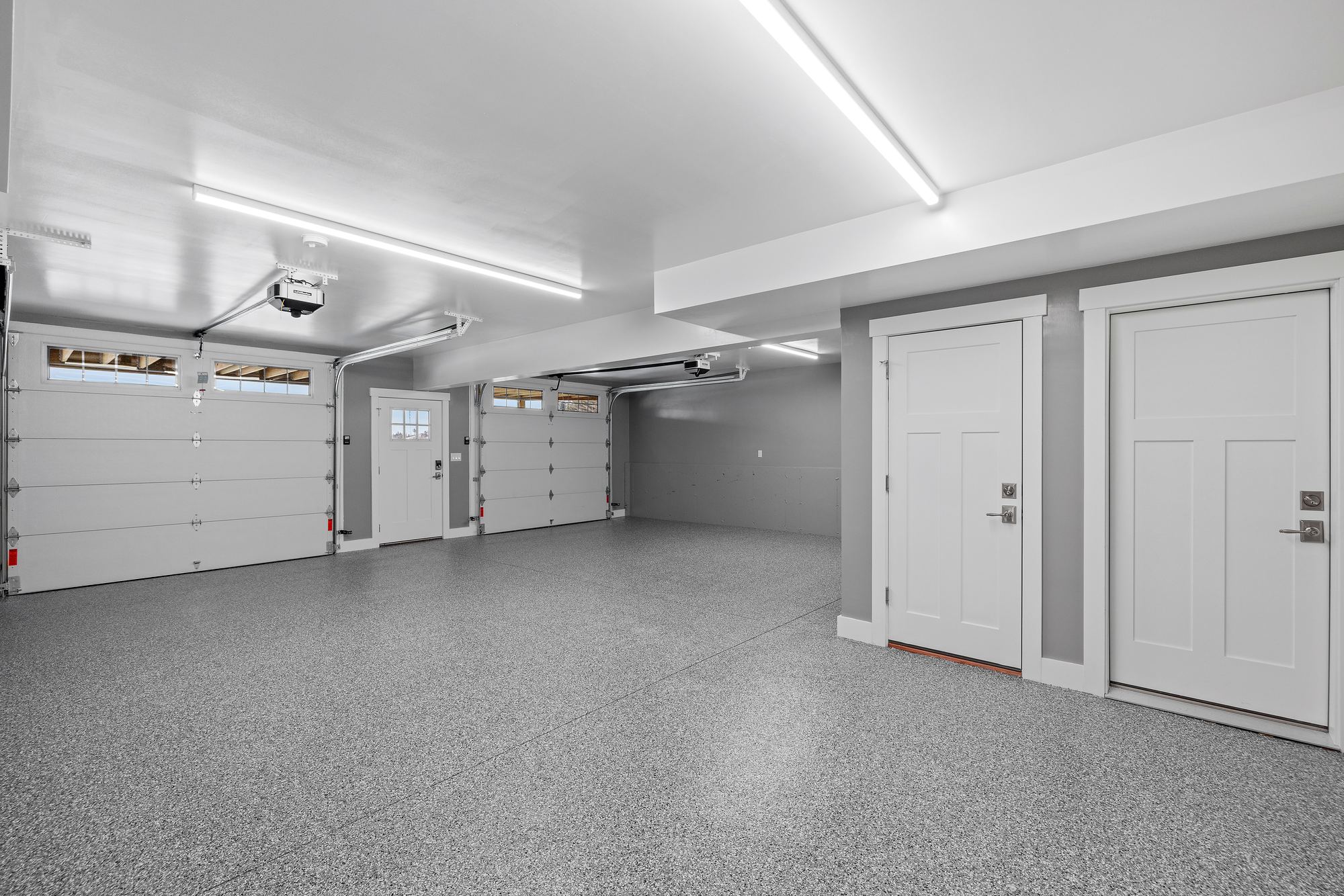
This combination — often marketed as a polyurea-polyaspartic system — has become the gold standard for residential garages because it pairs the deep, flexible bond of polyurea with the UV and wear resistance of polyaspartic, and it can usually be installed in a single day.
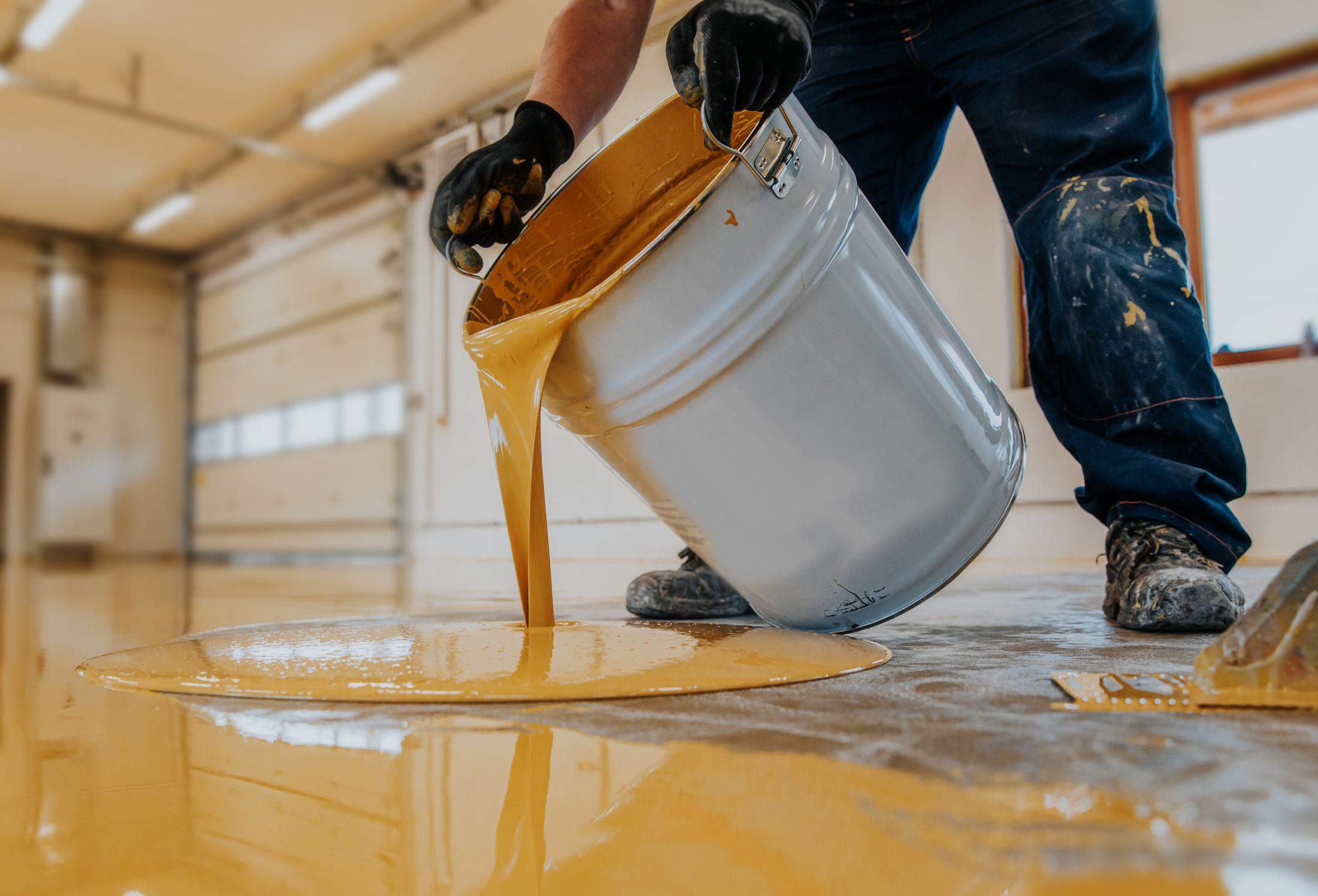
Benefits of polyurea floor coatings
Superior flexibility
Polyurea has far greater elongation than epoxy, meaning it can stretch before it cracks. That helps the coating ride out thermal expansion, minor slab movement and hairline cracking without failing. It is particularly well suited to older slabs, garages with a history of cracking, and floors exposed to temperature extremes.
Exceptional adhesion
Properly applied to ground concrete, polyurea forms an extremely strong mechanical bond. Many of the floor coating failures we see — peeling at the garage door, lifting under tires, flaking at cracks — are adhesion failures. A polyurea base over correct preparation dramatically reduces that risk.
Impact and abrasion resistance
Dropped wrenches, rolling floor jacks, bikes, dollies and kids' toys all take a toll on a floor. Polyurea's toughness absorbs impact better than brittle coatings and resists chipping. It also stands up to the gritty Arizona dust that acts like sandpaper on softer surfaces.
Fast cure
Polyurea cures quickly, allowing the next layer to be applied the same day. That speed is what makes one-day garage installs possible without cutting corners on preparation.
Temperature tolerance
Polyurea performs across a wide temperature range once cured, and it is less sensitive than epoxy to installation temperatures. That gives us more flexibility to keep projects on schedule in summer heat.
Polyurea versus epoxy and polyaspartic
It can be confusing to hear three chemistry names thrown around. Here is a simple way to think about them. Epoxy is hard, rigid and high-build, with excellent adhesion and a forgiving working time, but it yellows in sunlight and is less flexible. Polyurea is tough and flexible with a very fast cure, making it an excellent basecoat, especially on slabs that move. Polyaspartic is a type of polyurea with a slightly slower, more workable cure and excellent UV stability, making it the ideal topcoat. We specify each chemistry where it performs best, and we will always explain why we are recommending a particular system for your floor.
Ideal applications for polyurea
- Residential garages, especially on older or previously cracked slabs
- Workshops, hobby garages and home gyms with heavy equipment
- RV garages, boat storage and golf-cart garages
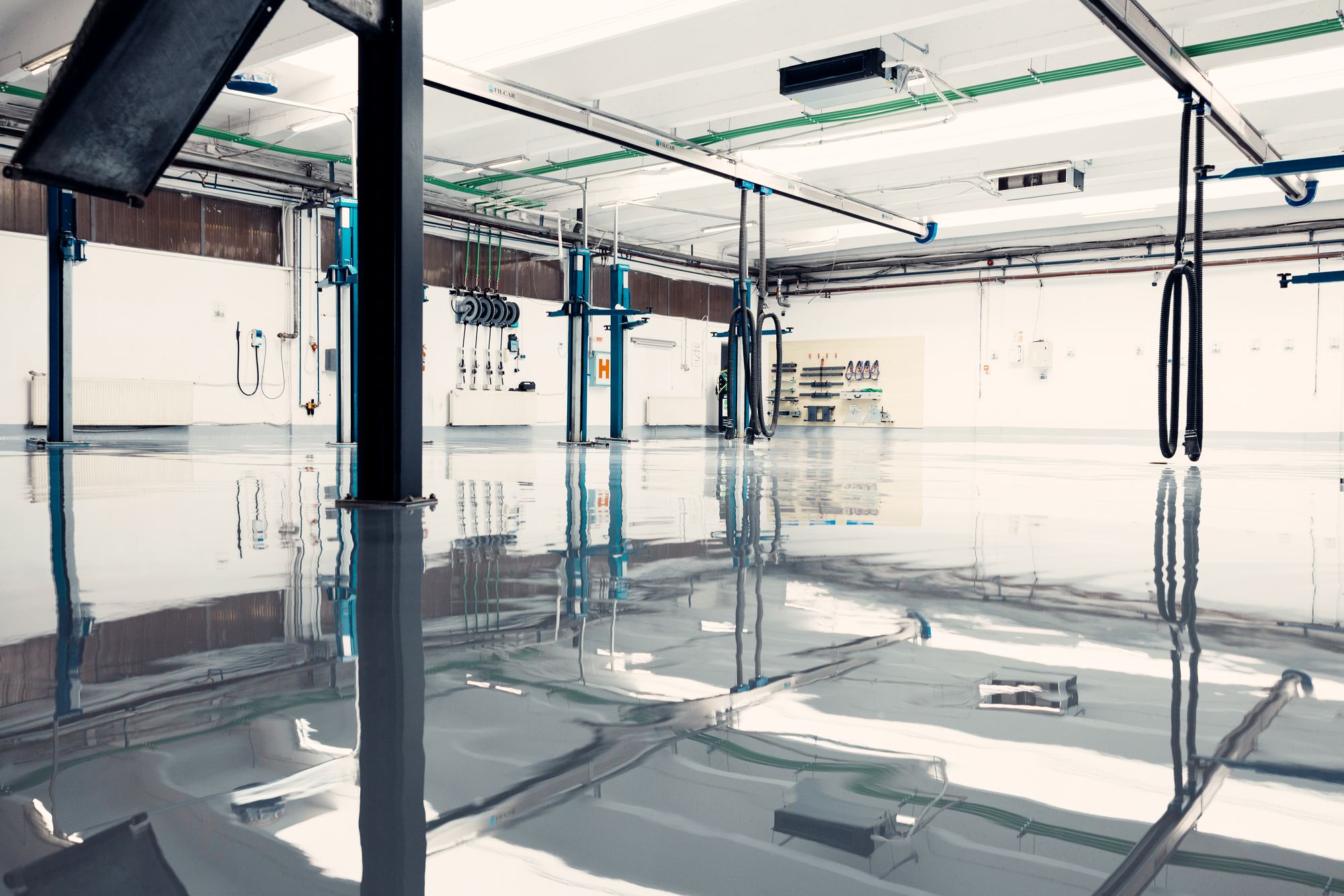
- Auto repair shops, detailing bays and dealership service departments
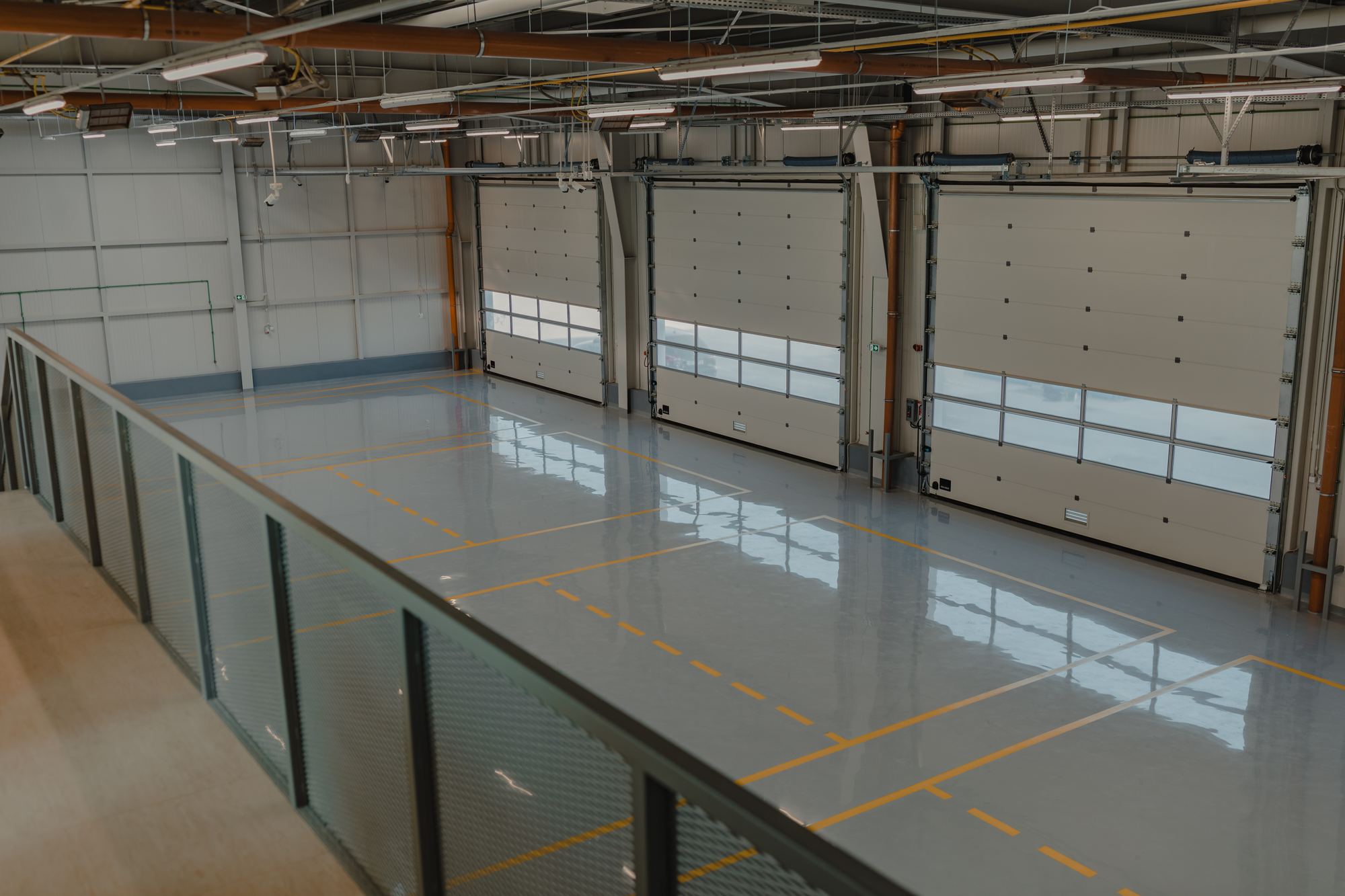
- Light industrial and manufacturing spaces with impact and abrasion
- Covered patios and exterior slabs when topcoated with UV-stable polyaspartic
Polyurea is a professional-only product. Its fast reaction time leaves very little working time, which is why it is not sold in consumer kits. Correct mixing, temperature control and application technique are essential.
Handling cracks and slab movement
No coating can stop a slab from cracking if the ground beneath it moves significantly. What a good system can do is handle normal movement gracefully and keep repaired cracks from reappearing as quickly. We evaluate every crack during the estimate, distinguish between hairline shrinkage cracks and active structural movement, and explain what to expect. Static cracks are filled and ground flush. Active cracks and control joints may be honored with a flexible joint treatment so movement is accommodated rather than resisted. Combined with a flexible polyurea base, this approach gives your floor the best chance of staying clean and intact.
Moisture and older Mesa slabs
Many older homes in Mesa were built without a vapor barrier under the slab. Moisture vapor rising through the concrete can push against a coating from underneath and cause blistering or loss of adhesion. We test slabs before coating and, where moisture levels are elevated, specify a moisture-mitigating primer beneath the polyurea base. Taking this step up front is far less expensive than repairing a failed floor later.
Finishes and customization
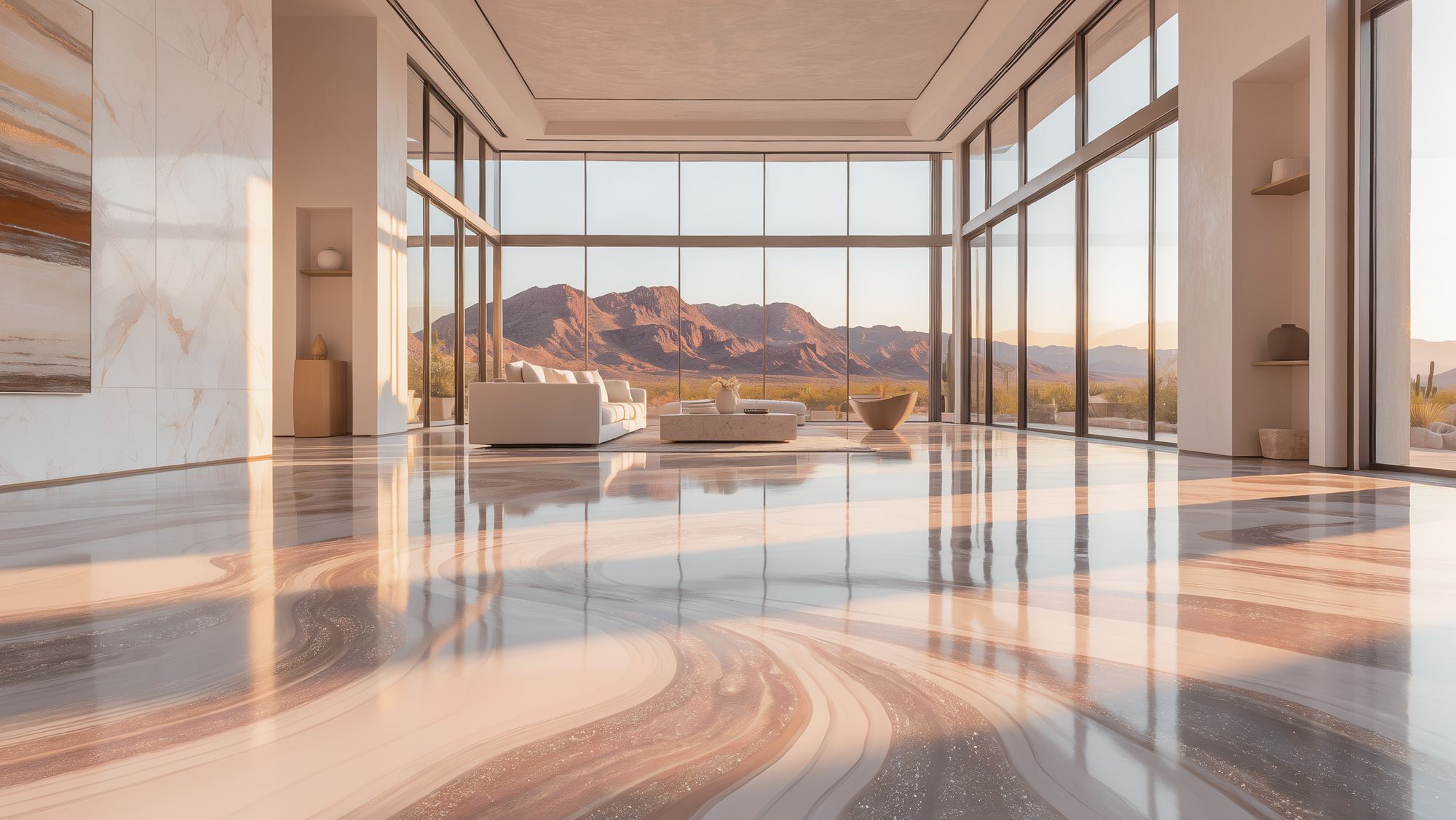
A polyurea-based floor can be finished in any of our decorative options: full-broadcast flake in dozens of blends, quartz for maximum texture, or solid colors with optional accent flake. Topcoats are available in gloss or satin with adjustable slip resistance. We can also add integral cove base, borders and parking guides.
Polyurea for workshops and heavy garages
If your garage is more workshop than parking spot, polyurea deserves a close look. Woodworking machines, welding carts, engine hoists, rolling tool chests and floor jacks put concentrated loads and repeated impact on the floor. Rigid coatings can chip at the point of impact, exposing concrete and giving moisture a path underneath. Polyurea's toughness and elongation let it absorb a surprising amount of punishment without cracking. Pair it with a thicker topcoat and a quartz or flake broadcast and you have a floor that can handle serious hobby use, RV and boat storage, or a home-based business.
What to ask about polyurea quotes
The word "polyurea" appears in a lot of marketing, so it is worth asking a few questions. Is the polyurea used as the basecoat, the topcoat or both? Is it applied over a diamond-ground surface? Is the topcoat aliphatic and UV-stable? How is moisture handled on older slabs? Clear answers to these questions tell you far more about how a floor will perform than the brand name on the bucket.
Getting the most from your polyurea floor
Once installed, a polyurea system needs very little from you. Keep grit swept out so it cannot abrade the topcoat, clean spills reasonably promptly, and use a pad under motorcycle kickstands and jack stands to spread point loads. For workshops with welding or grinding, a welding blanket protects the floor from hot slag. These simple habits keep the clear topcoat looking good and protect the flexible polyurea foundation underneath for the long haul.
Get a polyurea floor estimate in Mesa
We provide free on-site estimates throughout Mesa and the East Valley, including Gilbert, Chandler, Queen Creek, San Tan Valley, Apache Junction and Gold Canyon. We will evaluate your slab, test for moisture, look at cracks and joints, and recommend the right system for how you use the space. You will receive a clear, itemized written proposal and a realistic schedule.